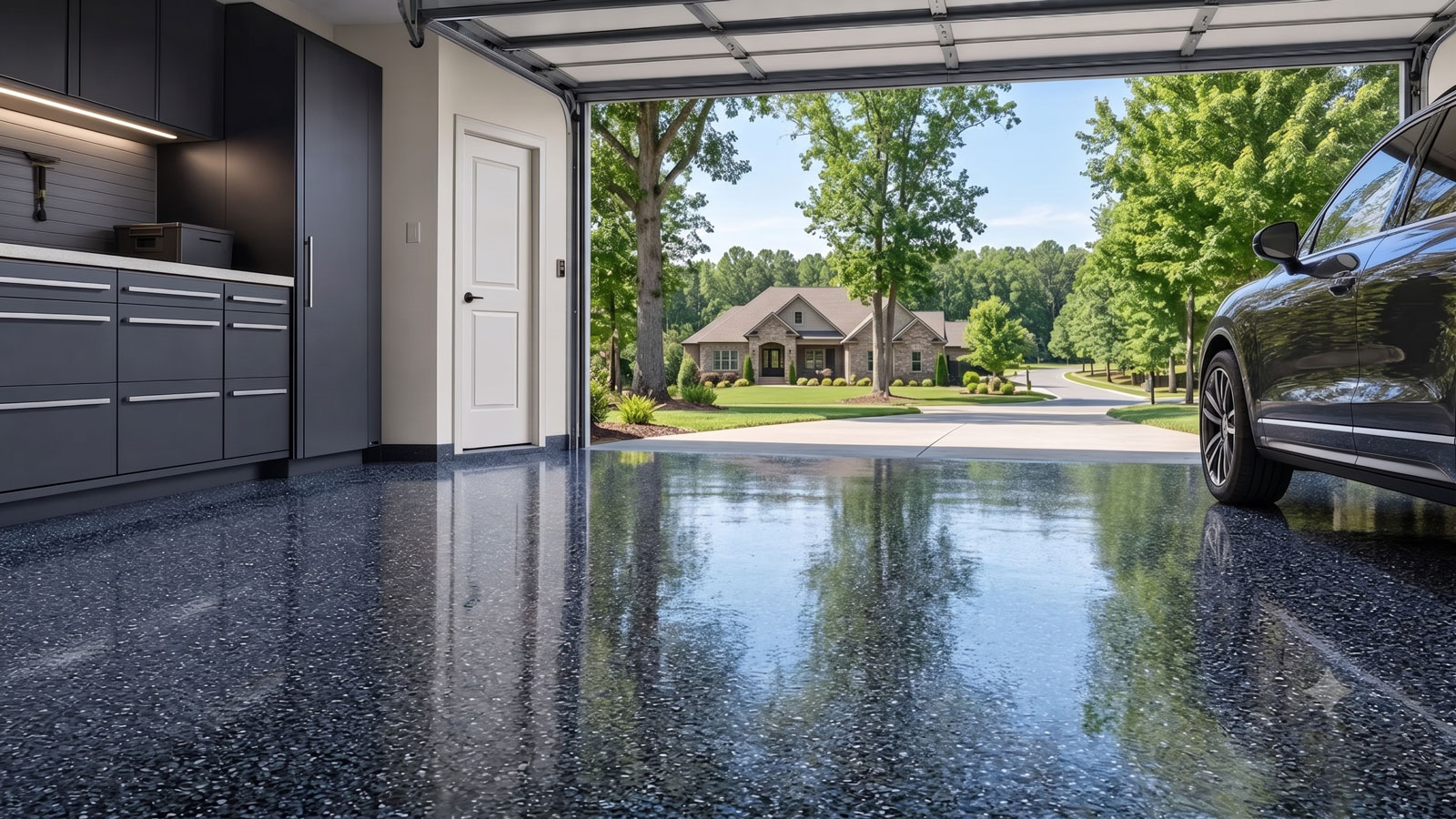
Garage Floor Coating in Fair Haven, NJ
Floor Coating Services in Fair Haven, NJ
Fair Haven's 2025 Environmental Resource Inventory describes about 2.5 miles of Navesink River frontage and a surface-water network that largely drains northward into the river. It also identifies a smaller drainage connection toward Little Silver Creek and local creek systems including Fourth Creek. This documented riverfront pattern is useful background for a garage project, but the slope and water path at a particular driveway must still be observed in person.
The borough's official stormwater page publishes a municipal pollution prevention plan, outfall and infrastructure maps, private inlet rules and salt-storage requirements. Those sources show specific municipal runoff concerns rather than generic coastal advertising. At a garage, ask whether exterior water reaches the threshold, whether oil or previous paint must be removed, and whether the concrete surface is sound before a coating is chosen.
Vehicles returning in winter can bring NJDOT salt and brine residue indoors. For Fair Haven households, the finish selection should therefore consider cleaning and seasonal grit alongside decorative preferences. A quote should distinguish grinding, repair of stable defects, moving joints, garage-door transitions and any exterior drainage correction; an epoxy or polyaspartic topcoat does not repair a poorly graded driveway.
Local Market Insight
Fair Haven documents 2.5 miles of Navesink frontage and distinct drainage paths to the river and Little Silver Creek. Borough outfall maps and stormwater ordinances supply useful context, but a homeowner should test the actual garage entry and floor condition before adding drainage or coating costs.
What Affects the Cost of Garage Floor Coating in Fair Haven?
Fair Haven's Navesink river frontage and locally mapped creek routes make entry-water assessment a useful part of scoping. But the borough's rivers and outfalls are not a reason to claim every garage slab is damp.
Preparation allowances should be based on actual old coatings, repairs, floor contamination, driveway transition, and access. External runoff correction belongs in a separate line from the garage coating.
The published range is $6–$12 per sq. ft., and a typical two-car garage often falls in the $3,000–$5,500 range. Floor size, concrete condition, preparation, coating system, and finish selection determine the final quote.
- 2.5 miles of Navesink frontage: The borough inventory reports about 2.5 miles of riverfront. Waterfront location gives regional drainage context; threshold water and concrete condition must be evaluated at each property.
- Named local creek pathways: Fourth Creek and other local ponds and streams drain toward Navesink, with limited flow toward Little Silver Creek. Actual driveway slope—not a generalized city label—drives any garage water correction.
- Municipal outfall and stormwater maps: Fair Haven publishes MS4 outfall and infrastructure materials. Public storm drains do not ensure that a private low apron sheds water away from the garage.
- Paint, repairs and joint movement: The coating bid should describe cleaning, grinding, removal of old finishes, stable defect repairs and movement joints. These vary more than nearby house prices.
- NJDOT winter residue: Salt and brine carried by vehicles should be cleaned from the garage. A coating does not eliminate maintenance or replace contamination removal before installation.
- UV, edges and return-to-service: Compare topcoats for sunlight at the door, flake and traction options, accessibility around cabinets and steps, and the time before vehicles return.
Call for a clear, project-specific estimate — or request one online.
Fair Haven's Navesink Frontage and Creek Drainage
Fair Haven's 2025 Environmental Resource Inventory describes around 2.5 miles of frontage along the Navesink River. It also details borough surface runoff moving through local stormwater conveyance and streams, including Fourth Creek and a smaller connection toward Little Silver Creek.
These local water routes matter to community infrastructure and river health, but they do not reveal the water behavior of any individual garage. After rain, a homeowner should observe whether a driveway slope carries water across the door or whether the garage is only wet where tires and shoes have entered.
The borough publishes stormwater outfall maps, municipal drainage information, and a pollution-prevention program. Those records underscore that managing runoff is an ongoing local responsibility. A contractor cannot use a coating to correct an exterior grading problem or promise that the Navesink setting establishes slab vapor issues.
Ask for separate treatment of any persistent water entry, old paint removal, concrete repairs, control joints and new coating layers. That scope distinction is far more useful than the generic sales claim that all waterfront communities require waterproof garage floors.
Fair Haven Street Runoff, Road Salt and Cleaning a Coated Floor
Fair Haven's stormwater information warns that water flowing over roads, parking areas and lawns can carry pollutants such as motor oil and antifreeze into the river system. The town also publishes private salt-storage and storm-drain rules, showing that runoff quality is a locally recognized issue.
NJDOT confirms winter use of road salt and brine. These residues can be tracked into a garage on a vehicle, especially where the same space functions as a main household entrance. A properly installed continuous floor can help with ordinary cleanup, but the homeowner still needs to remove seasonal contamination.
Before installation, the crew should identify oil stains, old coatings, pitting, cracks, patches and moisture evidence. Some of these conditions require removal and mechanical profiling; others call for repairs or separate investigation. Covering a weak prior finish is not a durable shortcut.
Choose texture, UV stability and cure schedule around actual garage traffic. For Fair Haven households, an estimate that explains edge work, threshold preparation, material layers and maintenance offers more information than a vague premium-finish claim.
Frequently Asked Questions
Does Fair Haven's Navesink frontage determine which coating I need?
No. The borough has documented riverfront and creek drainage, but each garage must be assessed for concrete condition, previous finishes, and whether water actually enters from outside.
What do borough stormwater outfall maps tell a homeowner?
They show public drainage infrastructure. They do not prove a private driveway slopes correctly or that the garage slab needs a moisture barrier.
Will a decorative coating prevent oily wash water from polluting the Navesink?
A finish may make cleanup easier, but chemicals, oil and degreasers should not be washed into storm drains. Use responsible cleanup methods regardless of the coating.
Does winter salt change concrete preparation?
Residual road salt and grime should be removed before coating. NJDOT uses salt and brine, so ongoing seasonal cleaning is also realistic after installation.
What should a Fair Haven project quote detail?
Mechanical profiling, removal of old paint, stable repairs versus moving joints, doorway and edge details, actual coating layers, traction choice, and the time until the garage can be used.
Fair Haven Neighborhoods & Local Context
Typical Project Cost
$3,000–$5,500
Typical two-car range. Final pricing depends on floor size, concrete condition, preparation, coating type, and finish options.
Helpful Guides