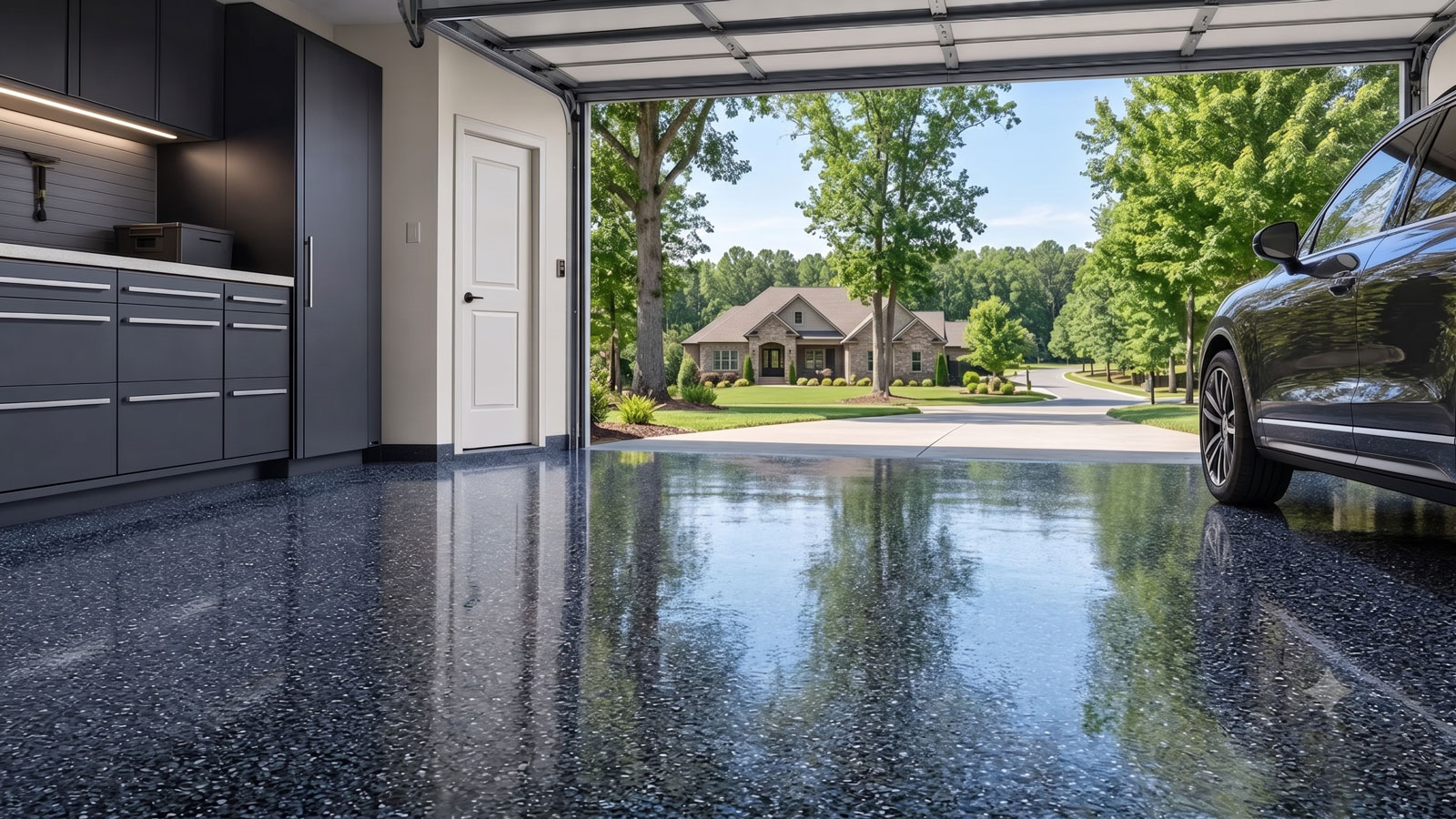
Garage Floor Coating in Ocean Township, NJ
Floor Coating Services in Ocean Township, NJ
Ocean Township in Monmouth County has a documented municipal stormwater program rather than a single generic coastal exposure. The township publishes outfall maps, street-sweeping zones, and local stormwater ordinances, and lists a Watershed Improvement Plan approved by New Jersey's environmental agency in March 2026. Those are public-system management facts; the drainage behavior of an individual garage depends on its driveway, floor, and neighboring runoff conditions.
The municipal stormwater plan addresses groundwater recharge and runoff quantity and quality, including performance standards for new major development disturbing an acre or more. That rule framework should not be stretched into an assertion that every Ocean Township slab has a moisture problem. A garage project should separately evaluate the old floor coating, patches, oil staining, cracks, and any water repeatedly crossing the entry.
Seasonal coastal weather and New Jersey road treatments make wet grit and salt cleanup useful considerations. Ask whether a decorative flake finish meets the household's needs for traction and sweeping, whether a topcoat sees direct sunlight at the garage door, and when vehicles may return. What matters is the specified coating assembly and surface preparation, not the general phrase 'shore corridor.'
Local Market Insight
Ocean Township's municipal stormwater program includes a 2026 NJDEP-approved Watershed Improvement Plan, outfall mapping and street-sweeping zones. These sources describe infrastructure management; a private garage coating depends on observed threshold water and the concrete's actual preparation needs.
What Affects the Cost of Garage Floor Coating in Ocean Township?
Ocean Township's NJDEP-approved watershed program and municipal stormwater plan create local runoff context, but coating costs should respond to the property's threshold and existing concrete. A mapped public outfall does not imply every garage needs a moisture barrier.
The quote should identify prior floor coating removal, cracks, joint treatment, access, winter contamination and the topcoat's suitability for the actual entry exposure. Keep external drainage improvements distinct.
The published range is $6–$12 per sq. ft., and a typical two-car garage often falls in the $3,000–$5,500 range. Floor size, concrete condition, preparation, coating system, and finish selection determine the final quote.
- 2026 watershed improvement planning: The township lists a Watershed Improvement Plan approved by NJDEP in March 2026. That indicates municipal runoff management, not a test of private garage concrete.
- Mapped MS4 outfalls and street sweeping: Ocean Township provides public outfall maps and street-sweeping zones. These are evidence of municipal maintenance, but the driveway and garage threshold still require property-level inspection.
- Development runoff standards: The municipal plan describes requirements for major projects disturbing an acre or more. Those standards do not dictate a residential coating formula; check actual pavement and slab conditions.
- Previous finishes and worn slabs: Garage paint, sealers, oil, cracks and patches should be identified before grinding. Coating over incompatible material can affect adhesion irrespective of proximity to the shore.
- Winter deicing and grit: NJDOT salt and brine can enter with vehicles. Existing residues need removal, and the completed coating still needs appropriate cleaning.
- Finishes and schedule: Doorway UV, traction, flake texture, steps and return-to-parking times matter to a usable installation beyond the base square-foot price.
Call for a clear, project-specific estimate — or request one online.
Ocean Township's 2026 Watershed Improvement Plan
Ocean Township's official stormwater program lists a Watershed Improvement Plan approved by NJDEP in March 2026, along with a municipal stormwater management plan, outfall mapping, street-sweeping zones and stormwater ordinances. These categories describe different forms of infrastructure information: the plan addresses receiving waters and priorities, the outfall map locates discharge points, and sweeping schedules identify regular debris-removal work. For an individual garage, none can substitute for recording the driveway's actual water path and checking whether the old floor finish is sound. This provides specific local evidence of organized runoff management.
The municipality's planning material describes performance requirements addressing groundwater recharge, runoff quantity and quality for certain major developments. These are municipal planning standards, not evidence that the slab beneath a particular garage has high moisture emissions.
For a homeowner, the relevant investigation is narrower. Check for water crossing the garage threshold, whether the floor stays damp after ordinary drying, and whether earlier coating failures are concentrated near repaired or wet areas. A coating cannot remedy exterior runoff created by a low driveway.
Ask the installer to separate any drainage correction from paint removal, grinding, stable crack repairs, joint details, and resin topcoat. That distinction makes the town's stormwater planning useful without turning it into an unsupported moisture sales claim.
Ocean Township's Shore Corridor, Winter Streets and Daily Garages
Ocean Township's street-sweeping program and stormwater outfall documents illustrate local attention to grit and debris. A garage is a private version of that cleaning problem: tires can bring in wet road dust, oil residues and, during winter, deicing products.
NJDOT uses salt, brine and calcium chloride in winter roadway work. Before applying a resin coating, preparation should address contamination and old floor paint; afterward, routine cleaning is still necessary to prevent accumulation of grit and salt.
Some Ocean Township garages also have prior repairs, joint movement, steps, cabinets or transitions that complicate mechanical profiling. The number of surface repairs should come from inspection rather than a generic claim about humidity or coastal location.
Choose coating layers around actual garage traffic, sunlight at the entry, texture and cure conditions. A careful system proposal is more useful than categorizing every local garage as either coastal, wet or new.
Frequently Asked Questions
What does Ocean Township's NJDEP-approved watershed plan mean for my garage?
It is evidence of municipal runoff management, not a concrete moisture measurement. Assess actual property drainage and substrate condition before choosing coatings.
Can an MS4 outfall map diagnose water under my slab?
No. A municipal stormwater outfall map describes public conveyance. An indoor slab and driveway threshold need separate property-level assessment.
Why does street sweeping matter to a garage owner?
It underscores the role of grit and debris in runoff. A garage coating can assist routine cleaning after proper installation, but loose residue must still be removed.
Does winter brine affect surface preparation?
Yes, remaining salts and contaminants should be removed before mechanical preparation. NJDOT treats roads with salt and brine, so maintenance after coating matters too.
How do I compare Ocean Township quotes?
Compare profiling, removal of old coatings, cracks and joints, garage edges, named resin layers, topcoat exposure, traction and return-to-vehicle time.
Ocean Township Neighborhoods & Local Context
Typical Project Cost
$3,000–$5,500
Typical two-car range. Final pricing depends on floor size, concrete condition, preparation, coating type, and finish options.
Helpful Guides
Other Service Areas