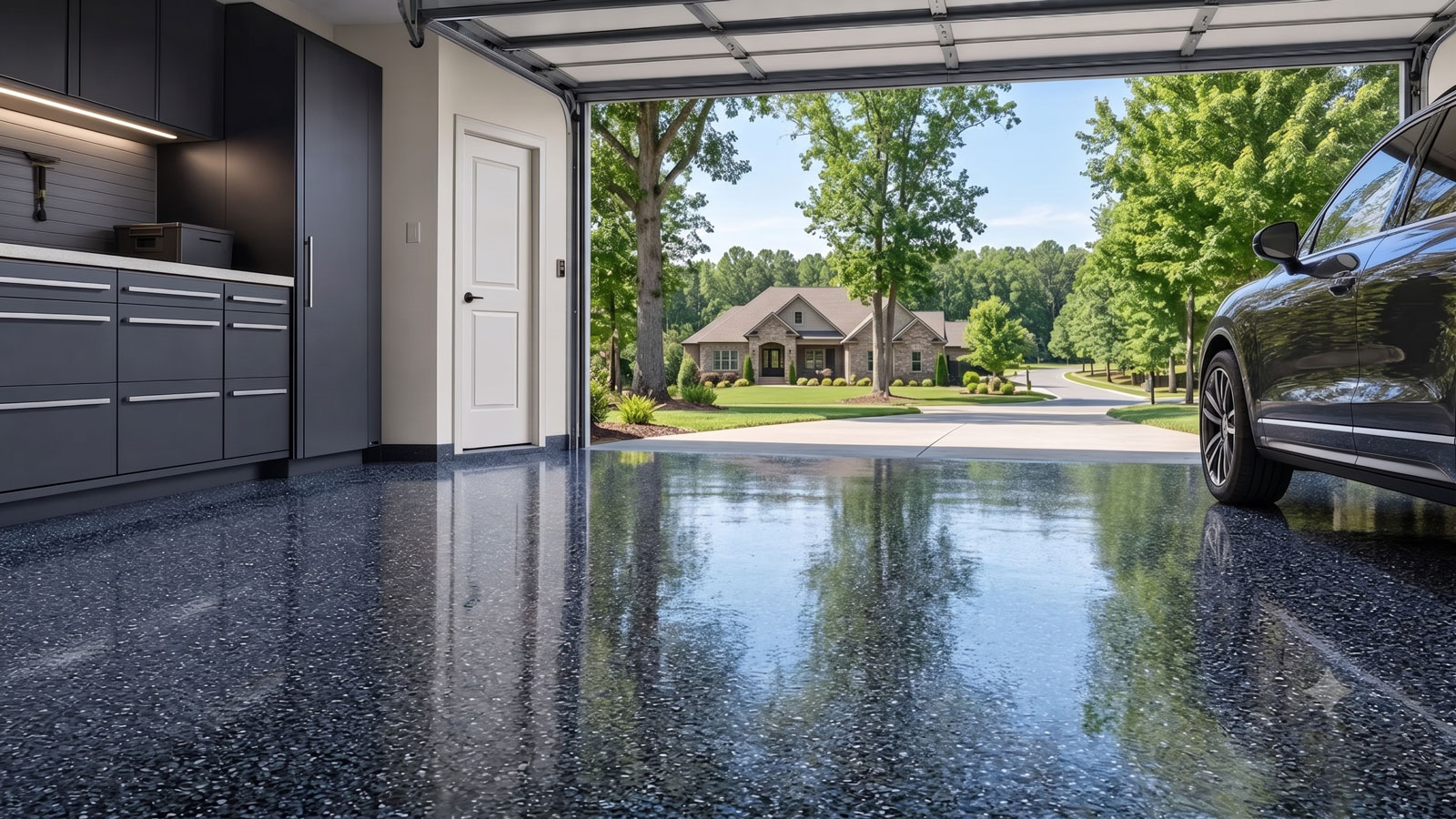
Garage Floor Coating in Colts Neck, NJ
Floor Coating Services in Colts Neck, NJ
Colts Neck's Natural Resources Inventory describes an inland Monmouth County landscape closely connected to the Swimming River Reservoir. It explains that most local drainage, aside from specified brooks, ultimately enters the reservoir, whose capacity it lists at approximately 2.6 billion gallons. Those facts differentiate Colts Neck from the tidal river boroughs closer to Red Bank and suggest focusing on actual grading, runoff, and the direction water moves across a garage apron.
The same township inventory estimates that at least 25% of its studied land, excluding certain military and reservoir lands, has poor permeability and/or elevated groundwater conditions. That is a landscape-level observation, not a test of any individual slab. An installer should not recommend a moisture barrier or predict coating failure based solely on a township soil percentage; existing dampness and any relevant site testing govern that decision.
NJDOT winter salt and brine can still reach inland garages on vehicles. Concrete used for parking or equipment storage may also retain old finishes, oils and repairs. A coating quote should specify cleaning and mechanical grinding, treatment of cracks and movement joints, threshold details, traction and cure time rather than imply that reservoir proximity determines the right epoxy or polyaspartic system.
Local Market Insight
Colts Neck's inventory lists the Swimming River Reservoir at about 2.6 billion gallons and notes that at least 25% of certain surveyed township land has poor permeability and/or high groundwater. These are regional findings; garage concrete must be evaluated directly rather than classified by township percentage.
What Affects the Cost of Garage Floor Coating in Colts Neck?
Colts Neck's reservoir drainage and documented soil variability can make water questions relevant, but township-level hydrology should not be turned into a universal moisture surcharge. The installation scope follows actual slab condition and observed water at the garage.
Prior sealers, cracked patches, control joints, access to storage areas, and whether exterior grading needs separate correction are the cost differences worth documenting before comparing finish systems.
The published range is $6–$12 per sq. ft., and a typical two-car garage often falls in the $3,000–$5,500 range. Floor size, concrete condition, preparation, coating system, and finish selection determine the final quote.
- Reservoir drainage pattern: The township inventory says nearly all drainage, excluding certain named brooks, reaches Swimming River Reservoir. That is a watershed fact, not an indication that every garage has vapor trouble.
- 2.6-billion-gallon reservoir: The mapped reservoir capacity underscores regional water management and pollution concerns. It gives no basis for adding an untested moisture product to a garage estimate.
- Soil permeability variability: The inventory estimates at least a quarter of certain surveyed land may have poorly permeable or high-groundwater soils. No contractor should apply that township figure as a site-level concrete result.
- Slab and garage use history: Equipment storage, old floor paint, oil or repairs may change removal and grinding work. Inspect the actual surface instead of assuming all larger lots have newer concrete.
- Winter residue: NJDOT road treatments bring salt and brine into inland garages as well. Prepare contaminated concrete correctly and provide routine cleaning instructions.
- Access, transitions and finish: Driveway thresholds, steps, edges, moving joints and chosen texture or topcoat may influence labor and timing beyond square footage.
Call for a clear, project-specific estimate — or request one online.
Colts Neck's Swimming River Reservoir and Drainage Evidence
The Colts Neck Natural Resources Inventory identifies Swimming River Reservoir as a central drainage destination. It says nearly all local drainage apart from some brooks enters the reservoir and gives its water-storage capacity at approximately 2.6 billion gallons. That is a specific local environmental setting, distinct from a coastal tidal borough.
The same inventory reports that at least 25% of the considered township land, excluding certain reservoir and military areas, has poor permeability and/or high groundwater. This is a broad mapping estimate, not a property-specific finding that an indoor garage slab has vapor emission problems.
Homeowners should observe whether rain flows across the driveway apron, whether concrete shows persistent damp areas or past adhesion failure, and whether any previous finish is sound. A low threshold and a moisture concern within the concrete are different conditions; exterior drainage work cannot be replaced by a coating.
The reservoir's water-quality importance also warrants responsible treatment of old paint, oil and solvent residues. The purpose of a coating is a cleanable surface on sound concrete, not permission to wash contaminants from a workshop into drains feeding the local watershed.
Inland Colts Neck Garages: Surface History and Winter Wear
Colts Neck's inland setting can still deliver significant winter contamination. NJDOT uses rock salt, brine and calcium chloride on regional roads; vehicles may bring this residue onto the garage floor along with melted snow and gritty runoff.
Because properties differ in how garages are used, identify earlier paint, penetrating sealers, oil stains and repair compounds before installing epoxy or polyaspartic. A workshop or equipment-storage area may need more cleaning and staging than a garage reserved for parked vehicles.
During the estimate, have the contractor distinguish stable cracks and chips from moving control joints and explain mechanical preparation at the apron, steps and edges. The township's soil map is not a substitute for inspecting those surface details.
Finally, compare actual product layers, maintenance instructions, sunlight at the garage opening, and vehicle-return curing requirements. These are the factors that determine a useful finished floor, not the assumption that every Colts Neck address shares the same groundwater conditions.
Frequently Asked Questions
Does Colts Neck's 25% soil finding apply to my garage?
No. The township's natural resources inventory describes broad soil permeability and groundwater patterns for portions of land. It is not a concrete test at your property.
How does the Swimming River Reservoir affect floor-coating decisions?
The reservoir is a local drainage and water-quality feature, not a garage coating specification. Focus on runoff at the doorway, actual slab condition and responsible containment of cleaning waste.
Can a coating eliminate winter salt cleanup?
No. NJDOT road salt and brine may be tracked into a Colts Neck garage; a sound finished floor can be easier to clean but still needs regular removal of residue.
Does a large garage need the same preparation as a small one?
The process depends on prior coatings, contamination, patches, access and joints. Area affects cost, but larger size alone does not establish the underlying repair scope.
Which system should I choose for a Colts Neck garage?
Select a specific epoxy or polyaspartic assembly based on verified slab readiness, sun exposure, traction, household use and cure schedule, not reservoir proximity.
Colts Neck Neighborhoods & Local Context
Typical Project Cost
$3,000–$5,500
Typical two-car range. Final pricing depends on floor size, concrete condition, preparation, coating type, and finish options.
Helpful Guides